Article | Intelligent Investment
Beyond the Sandbags: Flood Resilience & Facilities Management in Thailand
October 12, 2026
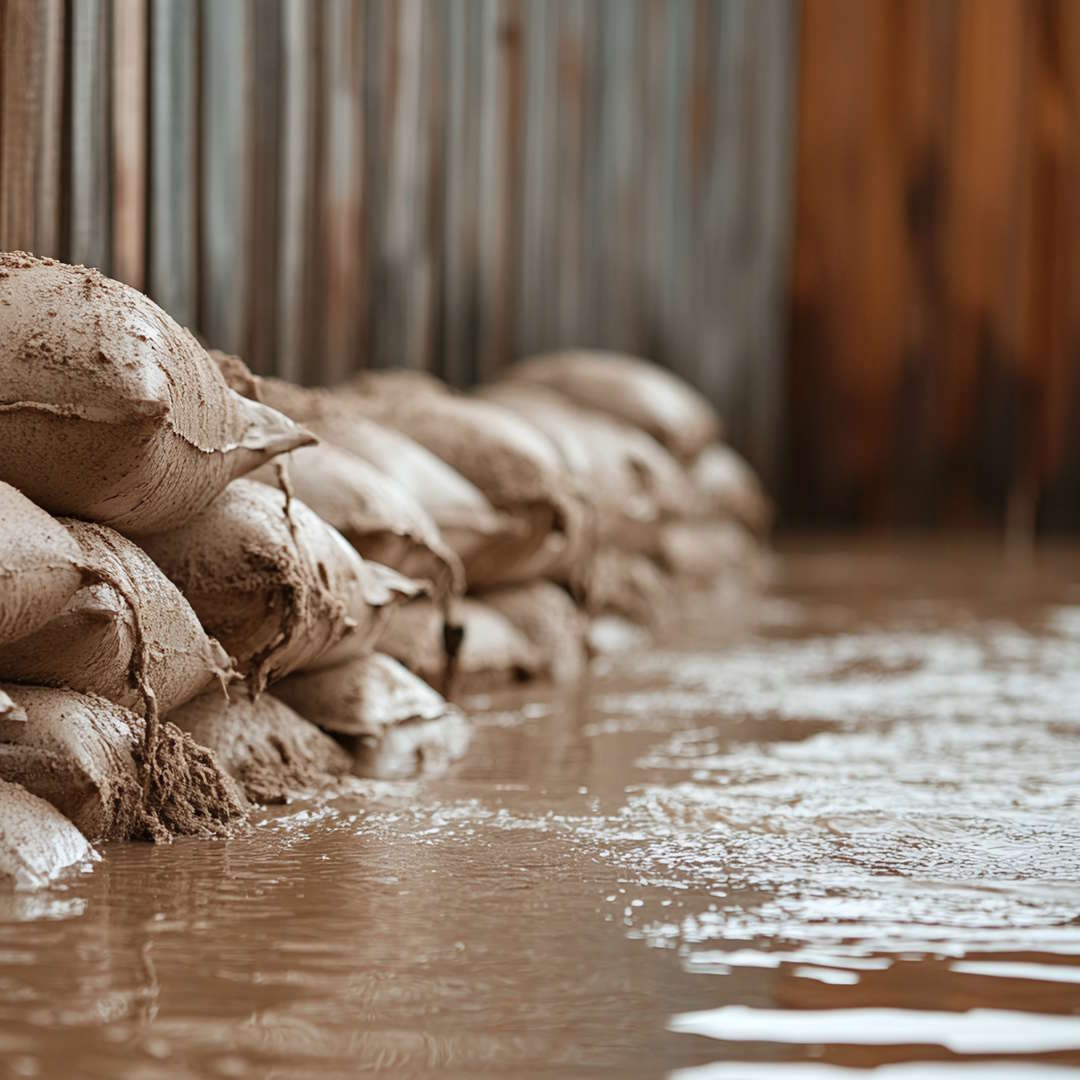
Transitioning from Reactive Mitigation to Engineered Business Continuity: Achieving Zero RTO and Zero Asset Damage for Enterprise Facilities in Thailand
When the tropical monsoon trough sweeps across Bangkok, Samut Prakan, Pathum Thani and the Eastern Economic Corridor (EEC), localized rainfall exceeding 100 millimeters in two hours frequently coincides with high seasonal tides in the Chao Phraya River. In these moments, effective facilities management in Thailand becomes a critical component of business continuity. In less than 45 minutes, arterial highways and secondary access roads transform into submerged canals. This extreme weather event does not merely challenge sandbag perimeters; it executes a rigorous audit of your organization's business continuity plan (BCP) and tests the strategic caliber of your corporate partner providing facilities management in Thailand.
Historically, organizations attempted to weather severe monsoon crises in isolation, resorting to internal trial-and-error with ad-hoc sandbag barriers and hastily procured rental pumps. In an era of intricate building automation and complex industrial operations, this vulnerability is precisely why forward-thinking enterprises are partnering with professional facilities management (FM) providers. A specialized FM partner serves as a strategic co-pilot, bringing tested institutional knowledge, cross-industry crisis insights and dedicated engineering governance so that enterprises never have to navigate extreme climate risks or operational crises alone.
Elevating electrical substations, main distribution boards (MDBs) and emergency standby generators onto upper floors is no longer enough. While primary power may remain energized, flooding across ground-floor production lines, logistics docks, cleanrooms and server rooms halts core operations instantly. Within advanced FM, flood mitigation is not an equipment procurement transaction; it is engineering risk governance designed to ensure that the moment municipal transit corridors clear, your facility achieves a recovery time objective (RTO) of zero and sustains zero asset damage.
Executive Summary
- This article is for CEOs, COOs, corporate real estate (CRE) directors, operations heads and industrial plant managers in Bangkok, the surrounding provinces and the EEC.
- Flood defense should move beyond ad hoc disaster recovery to engineered structural resilience that meets international business continuity standards.
- Conventional business continuity plans (BCPs) elevate electrical substations to prevent a total blackout. They do not protect ground-level revenue-generating spaces, loading docks or material inventories from floodwater entering the site or backing up through drainage.
- An Facilities Management partner works alongside enterprise leaders as a copilot, governing BCP across three pillars: people (workforce safety and shift logistics), process (predictive protocols and wet drills) and plant and infrastructure (hardened engineering defenses). No enterprise has to face a crisis alone.
- The result is shorter operational restoration cycles, protected high-value precision assets, stronger insurance risk profiles and secure supply chain commitments.
1. How Facilities Management in Thailand Supports Zero RTO
Under international continuity frameworks such as ISO 22301 (Security and Resilience - Business Continuity Management Systems), organizational resilience centers on the recovery time objective (RTO)—the maximum acceptable delay before critical business activities must be fully restored.While submerged external roads present temporary workforce transit challenges beyond private control, the definitive test of an enterprise's physical business continuity plan (BCP) begins the moment municipal water recedes:
- Facility A (Passive BCP with improvised sandbags): Hydrostatic pressure breaches the perimeter, driving 5 centimeters of contaminated water across ground-level operations. Sludge fouls CNC machine guide rails, and cardboard packaging absorbs ambient moisture. Although public roads drain within six hours, Facility A's real RTO extends to 14–21 days due to de-sludging, microbial remediation, motor insulation drying and electrical safety recertifications.
- Facility B (Engineered BCP with an integrated FM strategy): With the deployment of certified modular barriers and automated backflow knife-gate valves, internal operational spaces remain 100% dry. The moment access routes reopen, employees walk into an uncontaminated, operationally ready facility. The production line resumes that morning, achieving an operational RTO of zero.
Maintaining a bone-dry interior is not merely routine property upkeep; it is an executive BCP strategy to protect market share and fulfill contractual service level agreements (SLAs).
2. Hardening Physical Flood Defenses With Facilities Management in Thailand
Flood defense engineering systems must not be treated as standalone hardware, but as an integrated structural shield tied directly to building automation and incident command workflows.Perimeter Defense Engineering
Access roadways, pedestrian portals and loading docks must transition from open transit points to impenetrable barriers within minutes: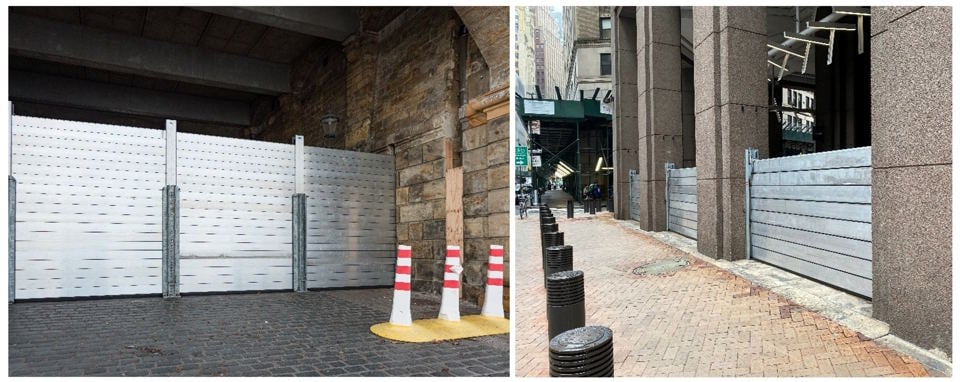
- Certified modular barriers: Demountable extruded marine-grade aluminum systems certified to BSI PAS 1188-1 (Flood Protection Products - Building Apertures) or ANSI/FM Approvals 2510 (Flood Mitigation Equipment Standard). These assemblies withstand hydrostatic heads up to 2.0 meters and resist hydrodynamic debris waves without permanent structural deflection.
- Passive buoyant gates: At critical vehicular gates without 24/7 dedicated staffing, passive buoyant barriers elevate automatically via natural hydrodynamic buoyancy as floodwaters fill subterranean retention pits, eliminating human operational error during crisis peaks.
Subterranean Hydraulic Isolation
The most insidious threat to operational continuity is hydraulic backflow surcharge. When municipal stormwater conduits achieve complete hydraulic saturation, municipal head pressure forces raw sewage and stormwater backward through private floor drains and grease traps:- Standard mechanical swing-check valves invariably fail because municipal debris, plastics and sediment lodge within the valve flap.
- Technical FM leaders implement motorized knife-gate valves complying with MSS SP-81 (Stainless-Steel Knife-Gate Valves) standards, linked directly to the building management system (BMS) to sever debris and isolate private infrastructure from municipal surcharges automatically.

3. Power Architecture for Unbroken Dewatering Operations
In severe weather crises, de-watering sump systems form the final internal line of defense. Engineering forensic reviews demonstrate that sump stations fail predominantly due to electrical infrastructure vulnerabilities rather than pump volumetric limits.| BCP Reliability Parameter | Common Operational Flaw | Engineered Business Continuity Standard |
| Pumping redundancy | Single pump or standard duty/standby prone to sediment jamming | Dual-redundant (N+1) submersible vortex/grinder pumps passing 50-millimeter solids without clogging |
| Submergence rating | IP55 or IP65 motors suffering winding burnout under deep inundation | Continuous deep-submergence rated motors built to IEC 60529 IP68 standards |
| Power distribution | Sourced from standard distribution boards; trips when general lighting shorts | Isolated, dedicated emergency circuits fed from the emergency power distribution board (EPDB) via fire-rated cables |
| Switchgear transfer | Manual transfer switches require dangerous technician movement during storms | Automatic transfer switches (ATS) restore generator power within 10 seconds per NFPA 110 Class 10 standards |
| Control switchgear elevation | Floor-mounted panels short-circuiting during localized room ponding | Wall-mounted switchgear elevated ≥1.5 meters above finished floor level, paired with non-contact ultrasonic level sensors |
4. The Strategic Role of Facilities Management in Thailand in Business Continuity Planning
Physical hardware accounts for only 30% of operational continuity; the remaining 70% depends on execution discipline and technical governance delivered by your partner in facilities management in Thailand:- Leading FM teams integrate live radar feeds from the Thai Meteorological Department (TMD) and the Bangkok Metropolitan Administration (BMA) Water Measurement Center into the BMS as predictive tools. Detecting storm cells within 30–50 kilometers provides a 45–60-minute window to draw down retention pits and deploy modular barriers before local rainfall begins.
- SOPs are validated through rigorous semi-annual wet drills, timing barrier erection under storm protocols, verifying knife-gate torque against simulated slurry and testing full-load generator transfers.
- Supply chain and asset governance primarily take the form of coordinating secondary access logistics, staging high-clearance shuttle transport for essential operators and aligning facility risk profiles with corporate property insurance underwriters.
Key Takeaways
- BCP centers on RTO, not just backup generators. Preserving building power is useless if production floors are submerged. The primary objective is keeping operational interiors bone-dry to achieve an instantaneous RTO.
- Flood defense engineering is strategic business continuity planning. Modular barriers and motorized isolation valves are not routine maintenance expenditures, they are essential structural insurance that preserve core revenues.
- Facilities management partners serve as strategic thought partners. Quality facilities management leaders bring cross-sector knowledge and technical rigor to enterprise risk management. Having an experienced partner ensures organizations never have to face climate volatility alone.
- Dewatering power networks should be isolated. Sump pumping networks must operate on isolated, generator-backed emergency circuits equipped with ATS units restoring power within 10 seconds, paired with control panels elevated ≥1.5 meters.
Futureproof your operations with proactive BCP and facilities management in Thailand
Partner with CBRE Thailand's FM experts to help reduce downtime, protect critical infrastructure and maintain business continuity during severe weather events and other operational disruptions.Frequently Asked Questions (FAQ)
Q1: If external roads are flooded and employees cannot commute, why is facility flood defense critical to our BCP?
A: Municipal road flooding is an ephemeral disruption that typically recedes within hours. However, if floodwaters breach the facility, it creates an operational catastrophe requiring weeks of structural drying, mold remediation and machinery recertification. Keeping the operational envelope completely dry ensures that the instant roads reopen, workforce teams can resume operations immediately, maintaining a minimum recovery time objective (RTO).Q2: Our facility elevated critical electrical switchgear to upper floors. Why is our BCP still exposed to flood risk?
A: Elevating electrical gear prevents a catastrophic building-wide blackout, but does nothing to protect ground-floor revenue centers, precision assembly lines, automated storage systems or inventory. Furthermore, municipal sewer surcharges can still breach subterranean drains via hydraulic backflow, ejecting contaminated effluent through ground-floor fixtures and causing severe biological hazards.Q3: Why are enterprises increasingly partnering with professional facilities management (FM) providers instead of handling crisis response internally?
A: Developing robust flood defense and business continuity requires cross-disciplinary engineering expertise, ranging from hydraulic invert-level modeling to critical power distribution. Partnering with a professional FM provider equips organizations with tested methodologies, institutional knowledge and dedicated engineering governance. As an expert copilot, the FM partner ensures the business never has to navigate complex operational disruptions or face major crises alone.Q4: Why are standard swing-check valves insufficient for backflow prevention in an engineered BCP?
A: Standard swing-check valves rely on simple gravity flaps. During severe municipal flooding, stormwater carries suspended urban debris, plastic bags, and sediment that lodge in the hinge, preventing complete seating. Under an engineered BCP framework, facilities require motorized knife-gate valves (MSS SP-81) that shear through solid debris under high mechanical torque, establishing an impenetrable seal.Q5: How does facilities management in Thailand help businesses prepare for flood risks?
A: Facilities management in Thailand helps businesses prepare for flood risks through engineering assessments, preventive maintenance, flood defense planning, emergency response protocols and business continuity planning (BCP). By combining technical expertise with operational readiness, facilities management teams help minimize disruption, protect critical assets and support faster recovery during severe weather events.Read More:
Rethinking Facilities Management in Thailand
Facilities Management in Thailand: Solving the Technical Debt Crisis
Facilities Management in Thailand: Escaping the Cycle of Reactive Spending
Disclaimer:
At CBRE, we prioritize the accuracy and integrity of our market information. While we use generative AI tools to assist in the composition and optimization of its presentation, all information is based on proprietary research and the profound insights from our experienced property professionals. Every article undergoes a thorough human review and fact-check to ensure it meets our standards for professional quality and technical accuracy.